Texas Seat Belt Law: How Not Wearing a Seat Belt Can Affect Your Injury Claim
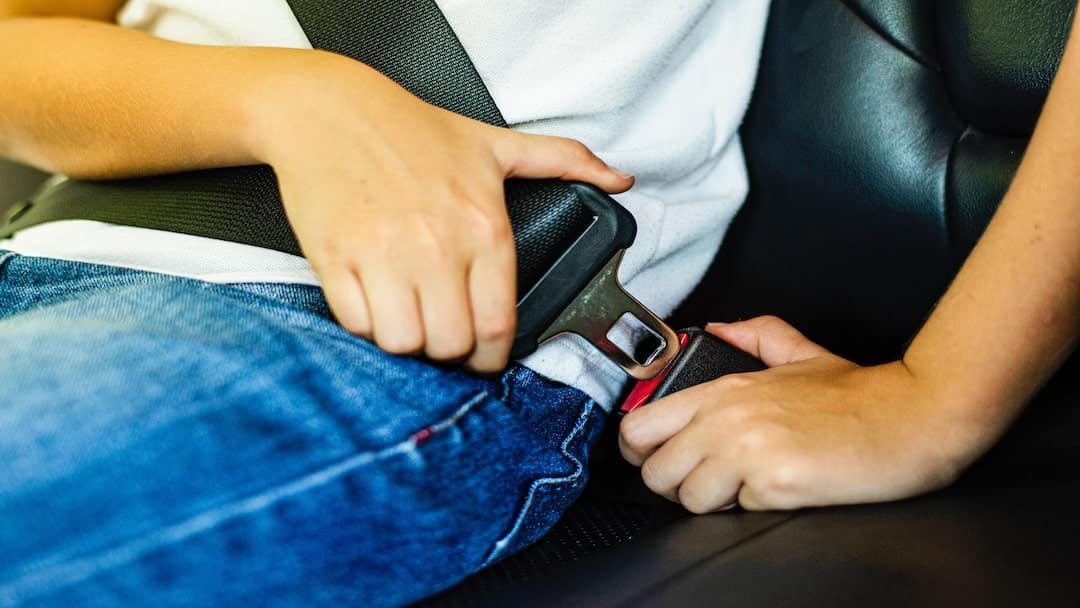
In Texas, if you weren’t wearing a seat belt during a car accident, this fact can be used to reduce your compensation. Since the 2015 Texas Supreme Court ruling in Nabors Well Servs. v. Romero, juries can assign a percentage of fault to plaintiffs for not wearing seat belts, potentially decreasing their damage awards significantly.
Historical Evolution of Texas Seat Belt Evidence Rules
Texas law on seat belt evidence has changed dramatically over the years:
Time Period Legal Rule Practical Effect
1974-1985
Carnation v. Wong rule Seat belt non-use couldn’t reduce damages unless it caused the accident
1985-2003 Complete ban No seat belt evidence allowed in civil trials
2003-2015 Legal uncertainty Courts split on admissibility after ban was repealed
2015-Present
Nabors rule Seat belt non-use admissible for comparative fault
What Changed in 2015?
The Texas Supreme Court’s decision in Nabors Well Servs. v. Romero transformed how seat belt use affects personal injury cases:
- Before: Evidence that you weren’t wearing a seat belt couldn’t be used against you
- After: This evidence can now reduce your compensation if it contributed to your injuries
The Court cited two major reasons for this change:
Modern public safety attitudes (mandatory seat belt laws) The need for fair allocation of responsibility in accidents
Texas Supreme Court Rules Evidence of Seat-Belt Non-Use Admissible for Comparative Fault
The Texas Supreme Court’s February 13, 2015, decision in Nabors Well Services, Ltd. v. Romero held that evidence of seat-belt non-use is admissible to determine a plaintiff’s proportionate responsibility for their injuries under Texas’ comparative fault system. The court stated:
“We hold relevant evidence of use or nonuse of seat belts, and relevant evidence of a plaintiff’s pre-occurrence, injury-causing conduct generally, is admissible for the purpose of apportioning responsibility under our proportionate-responsibility statute, provided that the plaintiff’s conduct caused or was a cause of his damages.” (Nabors Well Servs. v. Romero, 2015 Tex. LEXIS 142, 34 (Tex. 2015))
When Does This Matter in Your Case?
Seat Belt Evidence IS Admissible When:
- Not wearing a seat belt made your injuries worse
- There’s a clear connection between lack of seat belt use and the severity of injuries
Seat Belt Evidence is NOT Admissible When:
- Your injuries would have been the same with or without a seat belt
- The seat belt was defective
- The case involves pedestrians or motorcyclists (no seat belts involved)
How This Affects Your Compensation
Texas follows modified comparative negligence rules:
- If you’re found to be 50% or less at fault, you can recover damages reduced by your percentage of fault
- If you’re more than 50% at fault, you recover nothing
- This is known as the Texas 51% Bar Rule
Example Scenario:
- Jury awards $100,000 for your injuries
- Jury finds you 30% at fault for not wearing a seatbelt
- You receive $70,000 ($100,000 minus 30%)
The Data on Seat Belt Effectiveness
According to the National Highway Traffic Safety Administration (2023):
- Seat belts reduce fatality risk by 45%
- Seat belts reduce serious injury risk by 50%
In Texas (2022):
- 91.4% seat belt usage rate (up from 76% in 2003)
- 1,526 unbuckled fatalities (42% of all traffic deaths)
Practical Advice
For Accident Victims:
- Always wear your seat belt – it’s now both a safety and legal/financial necessity
- If you weren’t wearing a seat belt during an accident, tell your attorney immediately
- Your attorney may be able to argue that a seat belt wouldn’t have prevented your specific injuries
For Defense Teams:
- Investigate seat belt use early through police reports and witness statements
- Use crash reconstruction experts to demonstrate how seat belt use would have affected injuries
How Texas Compares to Other States
- States allowing seat belt evidence: California, New York, Florida, Michigan, Texas
- States banning seat belt evidence: Colorado, Illinois, Iowa
Legal Sources
- Nabors Well Servs. v. Romero, 456 S.W.3d 553 (Tex. 2015)
- Carnation Co. v. Wong, 516 S.W.2d 116 (Tex. 1974)
- Texas Transportation Code § 545.412(g) (repealed 2003)
- NHTSA Seat Belt Use Data (2023)
- Texas Department of Transportation Crash Statistics (2022)
Conclusion
The 2015 Nabors ruling significantly changed how seat belt use affects personal injury cases in Texas. While it gives defendants a new tool to potentially reduce damages, plaintiffs can still recover compensation by proving that seat belt use wouldn’t have changed the outcome or by demonstrating that the defendant’s negligence was the primary cause of the accident.
If you’ve been injured in an accident, whether or not you were wearing a seat belt, contact our experienced personal injury attorneys for a free consultation to discuss your specific case.